Signs the court is due
Color rubbing off on your shoes. Texture worn smooth in the baseline corridors so a ball skids. Hairline crazing across the whole court. A green or black tint along the north fence or under the oaks. Puddles that stay an hour after a storm. Any two of those and the surface is done; it is the acrylic that has failed, not the court, and a resurfacing brings it back.
Orlando courts age faster than the four to eight year national rule of thumb. Year round play, UV that does not let up, and 50 inches of rain a year wear the color coats on the low end of that range.
Five years is typical. Clubs with heavy use are at four.
The sequence
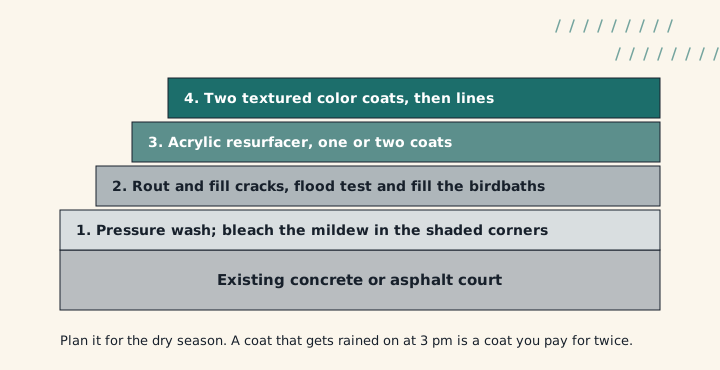
- Wash. 3,000 psi pressure wash. Mildew and algae in the shaded areas get a bleach treatment first and a second rinse. Acrylic bonds to clean concrete or asphalt; it peels off algae.
- Cracks. Hairlines are routed and filled. Structural cracks longer than a few feet get a fabric membrane system that bridges them. A displaced crack, where one side sits higher, is a base problem and a coating will not hide it for long. We say so up front.
- Birdbaths. We flood the court with a hose, mark every puddle deeper than a nickel after an hour, and fill them with patch binder in lifts.
- Resurfacer. One or two coats of acrylic resurfacer with sand, to level texture and seal repairs.
- Color. Two textured acrylic color coats. Two tone courts, with a different color inside the lines, are standard now.
- Lines. Taped and painted. Add pickleball lines in a second color while we are here; it is the cheapest conversion there is.
Four to seven working days. Each coat needs a dry surface and about an hour of sun to flash off, then a few rain free hours. That is why this is dry season work: October to May, mornings in summer if it has to be.
What it costs
| Scope | Planning range, one court |
|---|---|
| Wash, minor crack fill, resurfacer, two color coats, lines | $6,000 to $9,000 |
| Same plus membrane crack repair and several low spots | $9,000 to $12,000 |
| Cushioned system upgrade (rubber layers under the color) | $12,000 to $14,000 |
Asphalt courts tend to the higher end because they crack more and need more filler. If the court is being converted at the same time, see the conversion page; if the base has failed, the honest number is on the tennis court construction page, and in some cases a new pickleball court on part of the old footprint is the better spend.
Keeping the new surface
Blow off leaves and oak pollen weekly in spring. Pressure wash once a year and treat mildew as soon as it shows. Keep sprinklers off the court; reclaimed water in a lot of Orlando subdivisions carries enough nutrients to grow algae on a surface in a season. Pull the windscreen in June. Do that and the next resurfacing is six years out instead of four.
Straight answers
How often should a tennis court be resurfaced in Florida?
Every five to seven years for a residential court in Orlando, closer to four for a club court in full sun with daily play. Shade slows UV wear but brings mildew, which is a cleaning problem rather than a resurfacing one.
Can you resurface in the summer?
Yes, with early starts. Coats go on at first light and have to be dry before the afternoon storm. If the radar says otherwise, we wait a day. We will not coat a court that is going to get rained on.
Will resurfacing fix the cracks for good?
Hairline cracks, yes, for the life of the coat. Larger cracks get a membrane that lasts several years but will eventually show again because the base underneath is still moving. Displaced cracks are a base repair, not a surface repair.