The acrylic system
Every hard court here gets the same stack. After the slab cures 28 days: pressure wash, acid etch, one or two coats of acrylic resurfacer with silica sand to level the broom texture, two coats of textured color, then 2 inch lines taped and rolled. Each coat dries in about an hour in full sun and needs a few rain free hours after that. It is squeegee work, done by hand, and a good crew's coats are even enough that the ball never skids on a thick spot.
Cushioned acrylic puts two to four layers of rubber filled acrylic under the color. It is softer on knees, quieter for the neighbors, and runs $2,000 to $3,000 more on a pickleball court. Older players and anyone within 40 feet of a neighbor's lanai tend to choose it.
Colors in Florida
Two things wear a color here: UV and heat. Dark colors absorb both. A navy court reads 140 degrees or more on an infrared thermometer at 3 pm in July, chalks faster, and shows every scuff. A light gray, tan or pale blue court is 10 to 15 degrees cooler and fades evenly. Mid tone teal and a medium blue are the compromise most people land on: enough contrast to see the ball, cool enough to play on in the afternoon.
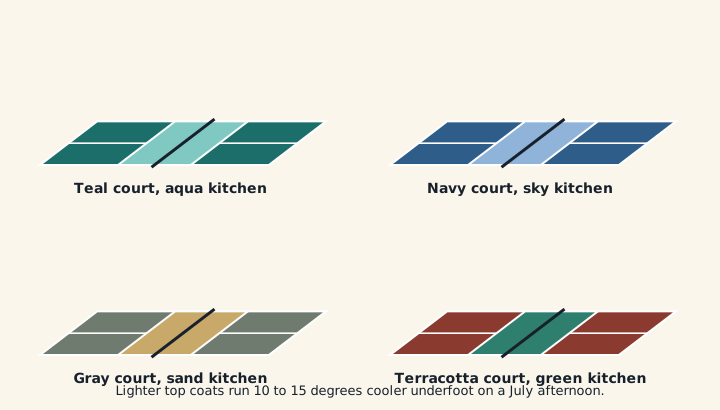
Two tone is standard now. The playing area inside the lines in one color, the out of bounds in another, and the kitchen often a third shade. It looks like a court and it helps players read the lines.
| Combination | Heat | Fade | Notes |
|---|---|---|---|
| Teal court, aqua kitchen, sand out of bounds | Moderate | Slow | Our most requested in Winter Park and Windermere |
| Medium blue court, light gray out of bounds | Moderate | Slow | Reads like a tournament court |
| Gray court, sand kitchen, white lines | Cool | Very slow | Coolest full sun choice; matches travertine pool decks |
| Terracotta court, green out of bounds | Warm | Moderate | Looks good under oaks; hot in open sun |
| Navy or charcoal court | Hot | Fast | Afternoon play unpleasant May to September |
Scheduling around the weather
Acrylic needs a surface temperature above 50 degrees and rising, which Orlando has on almost every day of the year; a handful of January mornings are the exception. The real constraint is water. From June through September the sea breeze front brings a thunderstorm to most of the metro by mid afternoon, and a coat that gets rained on inside its first few hours washes out and goes on again at your expense. So summer coating runs 7 am to noon. October through May the whole day is open. Plan a new court so the slab is cured by the dry season and the coats go on without drama; the construction page shows how the calendar lines up.
Keeping the color
Blow off oak pollen and leaves weekly in March and April. Pressure wash once a year and bleach treat any green edge before it spreads. Point irrigation heads away from the court; reclaimed water in many Orlando subdivisions feeds algae. Expect a recoat every four to six years in full sun; the resurfacing page covers what that costs.
Straight answers
What is the coolest pickleball court color?
Light gray or sand base coats stay coolest in direct sun. Pale blue and light green are close behind. Teal and medium blue are a usable middle ground; navy, charcoal and dark green are the hottest.
Can you paint a court in the summer?
Yes, between about 7 am and noon, on days the radar is clear. The coats must be dry before the afternoon storm. A job that would take three days in March takes five in July.
How thick is the acrylic surface?
About the thickness of a credit card for the full system, more with cushioning. It is a coating, not a layer that fills dips; low spots get patched before it goes on.